Basketball Data Analytics: 2026 Market Forecast & 18% Growth
Advertisements

The basketball data analytics market is projected to experience an impressive 18% annual growth by 2026, fueled by increasing adoption of advanced statistical models and real-time tracking technologies across all levels of the sport.
The game of basketball, once primarily an art form driven by instinct and raw talent, has undergone a profound transformation. Today, it is increasingly a science, meticulously dissected and optimized through the power of data. The emergence of basketball data analytics companies is not just a trend; it’s a fundamental shift in how teams, players, and even fans engage with the sport. This revolution is accelerating, with market forecasts predicting an astounding 18% annual growth by 2026. This article delves into the forces driving this expansion, exploring the technologies, applications, and the profound impact data analytics is having on the hardwood.
The Evolution of Basketball Analytics: From Box Scores to Big Data
Basketball analytics has journeyed far beyond the traditional box score, evolving into a sophisticated ecosystem that leverages vast amounts of data to uncover nuanced insights. What began as simple statistical comparisons has blossomed into predictive modeling, player tracking, and comprehensive strategic planning. This evolution mirrors the broader technological advancements seen in other industries, but its application in basketball has been uniquely impactful.
Early forms of basketball analytics focused primarily on rudimentary statistics like points, rebounds, and assists. While valuable, these metrics offered a limited view of player and team performance. The turning point arrived with the introduction of advanced statistics, often termed ‘sabermetrics’ in baseball, which sought to quantify player contributions more accurately. Concepts like Player Efficiency Rating (PER) and true shooting percentage began to provide a deeper understanding of offensive output.
Key Milestones in Analytical Development
- Early Statistical Pioneers: Individuals like Dean Oliver, author of ‘Basketball on Paper,’ laid the groundwork for advanced basketball statistics, introducing concepts that moved beyond conventional metrics.
- Player Tracking Technology: The advent of optical tracking systems, initially by STATS LLC (SportVU) and later by companies like Second Spectrum, revolutionized data collection, capturing every movement of players and the ball.
- Machine Learning Integration: Modern analytics now heavily relies on machine learning algorithms to process complex datasets, identify patterns, and make predictions about future performance or game outcomes.
The journey from basic statistics to intricate predictive models has been swift and transformative. Teams now employ dedicated analytics departments, staffed by data scientists and statisticians, to translate raw data into actionable intelligence. This shift has not only changed how games are played and coached but also how talent is evaluated and developed. The sheer volume and velocity of data generated by modern basketball are staggering, requiring specialized tools and expertise to harness its full potential. This continuous drive for deeper understanding fuels the projected 18% annual growth in the basketball data analytics market, as teams and organizations seek competitive edges.
Driving Forces Behind the 18% Annual Growth Projection
The projected 18% annual growth in the basketball data analytics market by 2026 is not a random figure; it’s a reflection of several powerful trends converging within the sports industry. These drivers encompass technological innovation, competitive pressures, and an increasing understanding of data’s strategic value. Understanding these forces is crucial to grasping the future trajectory of this dynamic sector.
One of the primary catalysts is the continuous advancement in data collection technologies. High-resolution cameras, wearable sensors, and sophisticated optical tracking systems now capture an unprecedented array of data points. This includes everything from player movement speed and acceleration to shot trajectory, defensive positioning, and even physiological responses. The ability to collect such granular data forms the bedrock for more intricate analytical models.
Technological Innovations Fueling Expansion
- Advanced Player Tracking: Systems like Second Spectrum and Kinexon provide real-time location data for every player and the ball, enabling detailed analysis of spacing, off-ball movement, and defensive rotations.
- Wearable Technology: Smart garments and devices monitor biometric data, offering insights into player fatigue, recovery, and injury prevention, optimizing training regimens.
- Artificial Intelligence and Machine Learning: AI algorithms are crucial for processing vast datasets, identifying complex patterns, and generating predictive models for player performance, opponent tendencies, and game outcomes.
Beyond technology, the intense competitive landscape across professional leagues like the NBA and collegiate sports is a significant driver. Every team is constantly seeking an advantage, and data analytics offers a scientifically sound pathway to uncover those edges. From optimizing draft picks and free-agent acquisitions to refining in-game strategies and player development programs, data provides objective insights that traditional scouting alone cannot. Furthermore, the growing sophistication of sports media and fan engagement also contributes to this growth, as broadcasters and content creators leverage analytics to enhance storytelling and provide deeper insights to viewers. This multi-faceted demand ensures a robust future for basketball data analytics companies.
Key Players and Emerging Innovators in the Analytics Space
The landscape of basketball data analytics is populated by a mix of established industry giants and agile, innovative startups, all contributing to the sector’s rapid expansion. These companies offer a diverse range of services, from raw data collection and visualization to advanced predictive modeling and strategic consulting. Their collective efforts are shaping the future of how basketball is understood and played.
Leading the charge are companies that specialize in comprehensive player and ball tracking. These firms provide the foundational data that fuels almost all subsequent analytical efforts. Their systems are typically installed in arenas, capturing every micro-movement and interaction on the court, which is then processed and made available to teams for in-depth analysis.
Prominent Companies and Their Offerings
- Second Spectrum: A leader in optical tracking and AI-powered analytics, providing real-time data, augmented video, and predictive models for NBA teams and broadcasters.
- Synergy Sports Technology: Offers advanced video scouting and analytics platforms, allowing teams to break down game footage with integrated statistical data, helping coaches with game planning and player development.
- Kinexon: Specializes in high-precision real-time tracking for performance monitoring and tactical analysis, often utilized for both in-game and practice settings to optimize player load and prevent injuries.
- Catapult Sports: While broader in sports, their wearable technology provides crucial athlete monitoring data, including movement analysis, physiological loads, and recovery metrics, valuable for basketball player management.
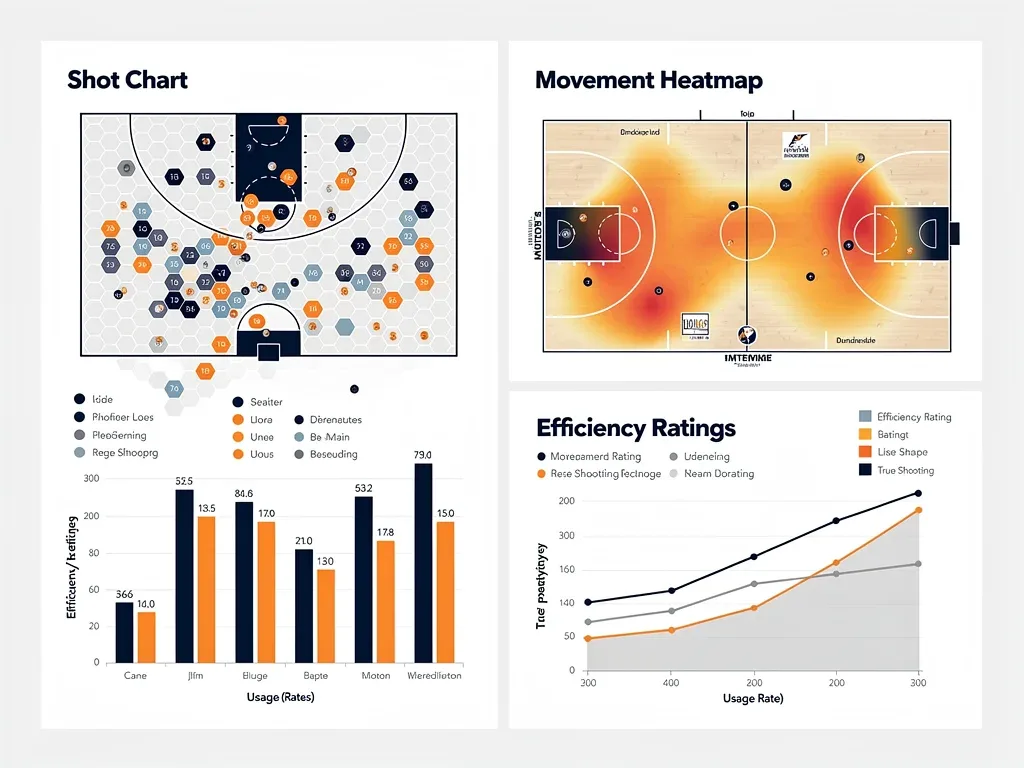
Beyond these established names, a wave of smaller, innovative companies and independent data scientists are continually pushing the boundaries. These emerging players often focus on niche areas, such as developing specific predictive models for draft analysis, optimizing free throw percentages, or creating bespoke analytical tools for individual player development. The collaborative yet competitive environment among these entities fosters continuous innovation, ensuring that the basketball data analytics market remains at the forefront of sports technology. This vibrant ecosystem is a testament to the sustained 18% annual growth projected for the sector.
Impact on Player Performance and Development
The influence of basketball data analytics extends far beyond strategic game planning; it has fundamentally reshaped how individual player performance is evaluated, developed, and optimized. From aspiring collegiate athletes to seasoned NBA veterans, data-driven insights are now integral to understanding strengths, identifying weaknesses, and crafting personalized training regimens. This deep dive into individual metrics is a cornerstone of the projected 18% annual growth in the analytics market.
Coaches and trainers now have access to an unparalleled level of detail regarding each player’s on-court activities. This includes not just traditional statistics, but also advanced metrics like defensive impact on opponent shooting percentages, efficiency in specific offensive sets, and even the energy expenditure during various game situations. Such granular data allows for a highly individualized approach to player development.
Personalized Training and Skill Enhancement
- Shot Selection Optimization: Analytics can pinpoint a player’s most efficient shooting spots and types of shots, guiding practice efforts to maximize scoring output.
- Defensive Scheme Adaptation: Data helps players understand their defensive assignments, rotations, and effectiveness in different coverages, leading to improved team defense.
- Load Management and Injury Prevention: By tracking physical exertion and biometric data, teams can tailor training loads, manage minutes, and identify early signs of fatigue or potential injury, extending player careers.
Furthermore, data analytics plays a crucial role in talent identification and scouting. Draft prospects are no longer solely judged by highlight reels or raw athleticism; their statistical profiles, advanced metrics from collegiate play, and even their performance in combine drills are rigorously analyzed. This data-first approach helps teams make more informed decisions about who to invest in, reducing the inherent risks associated with player acquisition. The ability to quantify and predict future performance with greater accuracy is a powerful tool, ensuring that the investment in analytics yields tangible returns in player development and on-court success. This direct impact on player value and longevity underscores the value proposition of data analytics companies.
Transforming Team Strategy and Game Management
Basketball data analytics has become an indispensable tool for crafting winning strategies and making real-time game management decisions. Coaches, once relying heavily on intuition and experience, now integrate sophisticated data models into every aspect of their strategic approach. This integration is a prime example of why the basketball data analytics market is expected to grow by 18% annually, as teams seek every possible advantage.
Before a game even begins, analytics plays a critical role in opponent scouting. Teams can analyze vast datasets of an opponent’s tendencies, identifying their preferred offensive sets, defensive schemes, individual player matchups, and even their performance in specific situations like late-game scenarios or after timeouts. This detailed preparation allows coaches to develop tailored game plans designed to exploit weaknesses and neutralize strengths.
Data-Driven Strategic Applications
- Offensive Play Calling: Analytics helps identify the most efficient plays against specific defensive alignments, optimizing shot quality and scoring opportunities.
- Defensive Matchup Optimization: Data can suggest optimal defensive pairings to minimize an opponent’s star player’s impact or to maximize defensive versatility.
- Substitution Patterns: Coaches use data to understand the impact of different lineup combinations, identifying which five-player units perform best together and when to deploy them for maximum effect.
During games, real-time analytics provides immediate feedback, allowing coaches to make informed adjustments. For instance, if an opponent is unexpectedly effective from a certain area of the court, data can quickly highlight this trend, prompting a defensive change. Post-game analysis is equally crucial, as teams review performance metrics to understand what worked, what didn’t, and why. This continuous feedback loop of data collection, analysis, and application creates a powerful engine for improvement. The ability to dissect every possession, every player movement, and every strategic decision with objective data has fundamentally changed the art of coaching, making data analytics an essential component of modern basketball success.
The Future Landscape: AI, Predictive Modeling, and Fan Engagement
Looking ahead to 2026 and beyond, the future of basketball data analytics promises even more sophisticated applications, driven by advancements in artificial intelligence, predictive modeling, and an increasing focus on fan engagement. The projected 18% annual growth is merely a stepping stone for what’s to come, as the boundaries of what data can achieve continue to expand.
One of the most exciting frontiers is the continued integration of AI and machine learning to develop increasingly accurate predictive models. These models will move beyond simply forecasting outcomes to offering prescriptive advice, such as optimal player rotations based on real-time fatigue levels, or suggesting the most effective defensive scheme for an opponent’s next possession. The goal is to move from understanding what happened to predicting what will happen and recommending what should be done.
Emerging Trends and Future Applications
- Hyper-Personalized Player Development: AI will create even more tailored training programs, adapting in real-time to a player’s progress, biometric data, and specific in-game situations.
- Advanced Scouting and Draft Prediction: Sophisticated algorithms will analyze vast datasets from amateur leagues globally, identifying hidden gems and predicting their NBA potential with greater accuracy.
- Enhanced Fan Experience: Analytics will power more immersive broadcast experiences, personalized content, and interactive fan platforms, providing deeper insights and engagement opportunities.
- Ethical Data Use and Privacy: As data collection becomes more pervasive, companies will need to focus on ethical guidelines and robust privacy measures, especially concerning biometric and personal player data.
The role of data analytics in fan engagement is also set to grow significantly. Broadcasters and media companies will leverage advanced statistics and real-time visualizations to tell more compelling stories, offering viewers a deeper understanding of the game. Interactive platforms will allow fans to explore data themselves, creating a more personalized and engaging experience. However, this expansion also brings challenges, particularly around data privacy and the ethical use of sensitive player information. Addressing these concerns will be vital for sustained growth. The continuous pursuit of deeper insights, combined with ethical innovation, will ensure that the basketball data analytics market remains vibrant and continues its impressive trajectory.
| Key Aspect | Description |
|---|---|
| Market Growth | Projected 18% annual growth for basketball data analytics companies by 2026. |
| Driving Forces | Technological innovation, competitive pressure, and strategic value of data. |
| Player Impact | Optimizes performance, development, and injury prevention through personalized insights. |
| Team Strategy | Transforms game planning, in-game adjustments, and talent acquisition. |
Frequently Asked Questions About Basketball Data Analytics
What is driving the 18% annual growth in basketball data analytics?▼The growth is primarily driven by rapid advancements in data collection technologies, intense competition among teams seeking a strategic edge, and the increasing recognition of data’s value in optimizing player performance and team strategy across all levels of basketball.
How do data analytics companies collect basketball data?▼Data is collected using advanced optical tracking systems installed in arenas, wearable sensors on players, and sophisticated video analysis software. These tools capture everything from player movement and ball trajectory to biometric data, providing granular insights into game dynamics.
How does data analytics improve player performance?▼Analytics offers personalized insights into a player’s strengths and weaknesses, optimizing shot selection, defensive positioning, and training regimens. It also aids in load management and injury prevention by monitoring physical exertion and recovery, extending player careers.
What impact does analytics have on team strategy and coaching?▼Analytics transforms team strategy by providing detailed opponent scouting, optimizing offensive play calls, and refining defensive matchups. It enables coaches to make data-driven in-game adjustments and informed decisions regarding substitution patterns and talent acquisition.
What are the future trends in basketball data analytics?▼Future trends include greater integration of AI and machine learning for predictive and prescriptive modeling, hyper-personalized player development, enhanced fan engagement through immersive data visualizations, and increased focus on ethical data use and privacy concerns.
Conclusion
The robust projection of an 18% annual growth for basketball data analytics companies by 2026 underscores a paradigm shift in the sport. From revolutionizing player development and performance optimization to transforming team strategy and fan engagement, data is no longer a supplementary tool but a core component of modern basketball. This growth is fueled by continuous technological innovation, fierce competition, and an ever-deepening understanding of how objective insights can unlock competitive advantages. As artificial intelligence and machine learning become more sophisticated, the future promises even more profound applications, further cementing data analytics as an indispensable force shaping the game we love.