NBA MVP Race 2026: Statistical Breakdown Three Months In
Advertisements
The 2026 NBA MVP Race three months in reveals a compelling field of candidates, each presenting a strong statistical case for the league’s most prestigious individual award through elite performance and team success.
Three months into the 2025-2026 NBA season, the discussion around the
NBA MVP Race 2026 is already reaching a fever pitch. As the league’s brightest stars continue to dominate, the competition for the most valuable player award is proving to be as intense and unpredictable as ever. Who is truly standing out? Let’s dive deep into the numbers and narratives shaping this fascinating contest.
Early Frontrunners: Statistical Dominance and Team Success
As the calendar turns, a few names consistently appear at the top of MVP ladders, fueled by both individual brilliance and their teams’ strong standings. The early season has provided ample data to scrutinize, and the statistical profiles of these players paint a clear picture of their impact.
The foundation of any MVP campaign rests on consistent, high-level performance across a multitude of statistical categories. These early frontrunners aren’t just putting up big numbers; they are doing so efficiently and in ways that directly translate to wins for their respective franchises. Their ability to elevate teammates and maintain peak physical condition through the grueling schedule is also a significant factor.
Key Offensive Metrics
- Points Per Game (PPG): Elite scorers are always in the MVP conversation. The top candidates are averaging well over 28 PPG, often with impressive shooting splits.
- Assists Per Game (APG): Playmaking ability is crucial. Many leading contenders are also their team’s primary facilitators, dishing out 8+ assists nightly.
- True Shooting Percentage (TS%): Efficiency matters. Candidates with high TS% demonstrate their ability to score effectively without wasting possessions.
Beyond raw scoring, the offensive game of an MVP candidate encompasses their ability to create for others, space the floor, and operate within their team’s system with maximum efficiency. Players who can blend high-volume scoring with intelligent playmaking often distinguish themselves from pure scorers, showing a more complete offensive repertoire.
Defensive Impact
While offense often grabs headlines, defensive contribution is increasingly valued in MVP discussions. Players who can anchor their team’s defense, guard multiple positions, and impact the game on both ends are gaining more traction.
- Blocks and Steals: Disruptive defensive plays often energize a team and create fast-break opportunities.
- Defensive Rating: An advanced metric that gauges a player’s individual defensive efficiency and impact on points allowed.
The synergy between individual defensive effort and overall team defensive schemes is critical. An MVP candidate who elevates their team’s defensive identity, whether through rim protection, perimeter defense, or communication, adds another layer to their candidacy. This two-way excellence often separates the truly dominant from the merely outstanding.
In summary, the early frontrunners are characterized by their all-around statistical dominance, impacting both ends of the floor, and their direct contribution to their team’s winning record. Their sustained excellence through the first three months sets a high bar for the rest of the season.
The Reigning MVP’s Quest for Back-to-Back
The defending MVP is on a mission to repeat, a feat that solidifies legendary status. Three months into the 2026 season, their performance has been nothing short of exceptional, showcasing an evolved game and an even greater mastery of their craft. The challenge of maintaining such a high level of play while being the focal point of every opposing defense is immense, yet they continue to defy expectations.
Their statistical output remains staggering, often leading the league in multiple advanced metrics. However, the narrative around a back-to-back MVP isn’t just about the numbers; it’s about the leadership, the ability to adapt, and the relentless pursuit of perfection that defines their game. They are clearly demonstrating why they earned the award last season and are making a compelling case for a repeat.
Sustained Elite Performance
- Consistency: Averaging similar or even improved numbers across key categories compared to their MVP season.
- Efficiency: Maintaining high shooting percentages and low turnover rates despite increased defensive attention.
- Durability: Playing a significant number of games and minutes, showcasing their commitment and physical resilience.
The consistency shown by the reigning MVP is remarkable. Week after week, they deliver performances that not only fill the stat sheet but also lead their team to crucial victories. This sustained excellence is a testament to their dedication to their craft and their unwavering focus on team success.
Leadership and Team Impact
Beyond individual statistics, the reigning MVP’s leadership has been paramount to their team’s success. They have guided their squad through tough stretches, rallied them in critical moments, and fostered a winning culture.
Their presence on the court elevates everyone around them. Whether through clutch scoring, timely defensive stops, or simply commanding attention, this player makes their team significantly better. The synergy between their individual brilliance and the collective success of their team is undeniable, making their MVP case even stronger.
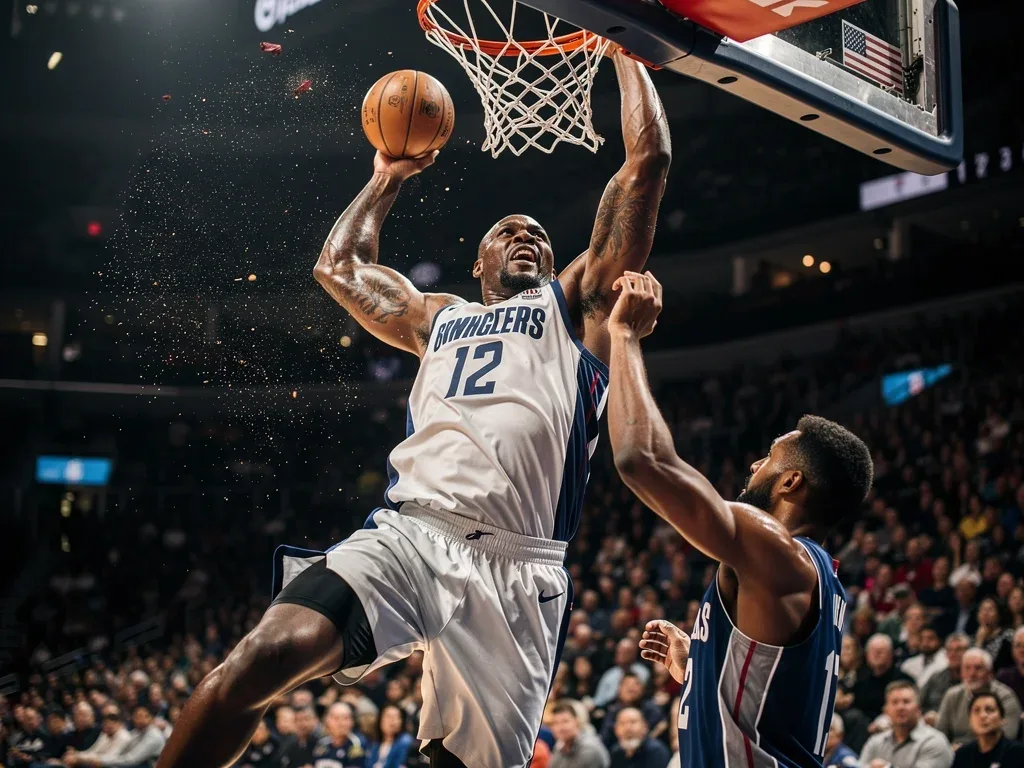
In conclusion, the reigning MVP’s quest for a repeat is built on a foundation of sustained elite performance, remarkable efficiency, and undeniable leadership. Their ability to continue dominating while carrying the weight of expectations makes them a formidable contender in the
NBA MVP Race 2026.
Emerging Stars: New Faces in the MVP Conversation
Every season, new talents rise to prominence, challenging the established order. The 2026 season is no exception, with several emerging stars making a significant splash and forcing their way into the MVP conversation. These players are often on the cusp of superstardom, and their breakout performances are turning heads across the league.
These rising stars aren’t just showing flashes of brilliance; they are delivering consistent, high-impact performances that are propelling their teams to unexpected heights. Their youth and hunger often translate into relentless energy and a fearless approach to the game, making them incredibly exciting to watch and formidable opponents.
Breakout Seasons and Unexpected Success
- Statistical Leaps: Significant improvements in traditional and advanced statistics compared to previous seasons.
- Team Overperformance: Their team is performing above preseason expectations, largely due to their individual contributions.
- Clutch Play: Consistently delivering in critical moments, showcasing an ability to perform under pressure.
The narrative of an emerging star often revolves around their ability to transform a struggling or underperforming team into a legitimate contender. Their individual brilliance acts as a catalyst, igniting their teammates and fostering a belief that anything is possible. This type of impact is incredibly valuable and weighs heavily in MVP discussions.
Versatility and Modern Game Adaptation
The modern NBA demands versatility, and these emerging stars embody it. They can score from anywhere, facilitate the offense, and often guard multiple positions, making them invaluable assets.
Their ability to adapt to the evolving landscape of the league, whether it’s through improved three-point shooting, enhanced defensive schemes, or advanced playmaking, sets them apart. They represent the future of the NBA, and their innovative approaches to the game are captivating audiences and analysts alike.
To summarize, the emergence of new stars adds an exciting dimension to the
NBA MVP Race 2026. Their breakout seasons, coupled with their versatile skill sets, make them compelling candidates who could very well challenge the more established names for the coveted award.
Statistical Deep Dive: Advanced Metrics and Their Significance
While traditional stats provide a good overview, advanced metrics offer a more granular understanding of a player’s true impact. Three months into the 2026 season, these numbers are crucial for dissecting the MVP race and identifying the most efficient and impactful players.
These sophisticated statistics move beyond simple counting numbers, attempting to quantify a player’s contribution to winning in ways that traditional box scores cannot. They account for factors like pace, efficiency, and overall impact on both ends of the court, providing a more holistic view of a player’s value.
Player Efficiency Rating (PER)
- Definition: A per-minute rating of a player’s statistical accomplishments, adjusted for pace.
- Significance: A high PER indicates a player is highly productive when on the court, combining scoring, rebounding, assists, and defensive plays.
PER is a quick way to gauge a player’s overall statistical contribution. While not perfect, it offers a strong indicator of a player’s offensive and defensive activity and how efficiently they convert opportunities into statistical output. Top MVP candidates consistently post elite PER numbers.
Win Shares (WS) and Win Shares Per 48 Minutes (WS/48)
- Definition: An estimate of the number of wins contributed by a player. WS/48 normalizes this to a per-minute basis.
- Significance: High WS and WS/48 suggest a player is directly contributing to their team’s success in terms of wins, making them highly valuable.
Win Shares are particularly compelling for MVP discussions because they directly link a player’s performance to team victories. Candidates who lead the league in WS or WS/48 are often at the heart of their team’s success, demonstrating their tangible impact on the win-loss column.
Value Over Replacement Player (VORP)
- Definition: A box score estimate of the points per 100 team possessions a player contributes above a “replacement level” player.
- Significance: VORP measures a player’s overall value to their team, considering all aspects of their game. Higher VORP means a more indispensable player.
VORP is a comprehensive metric that attempts to encapsulate a player’s total contribution across all facets of the game. It’s a strong indicator of how much better a player is than an average replacement, making it a powerful tool for evaluating MVP-caliber talent.
In conclusion, advanced metrics provide invaluable insights into the
NBA MVP Race 2026. By looking beyond traditional box scores, we can better understand the nuanced impact each candidate has on their team, reinforcing or challenging initial perceptions.
Team Performance: The Unspoken MVP Criterion
While individual brilliance is paramount, team success often acts as the ultimate tie-breaker in the MVP debate. Three months into the 2026 season, the standings are beginning to solidify, and the performance of a candidate’s team is becoming an increasingly important factor in their MVP narrative.
Historically, the MVP award rarely goes to a player on a losing team, or even one barely making the playoffs. The award is designed to recognize the player who is most valuable to their team, and that value is most clearly demonstrated when it translates into significant team success and a high seeding in their conference.
Winning Records and Playoff Contention
- Top Seed Impact: Players leading their teams to a top-two seed in their conference often receive significant consideration.
- Exceeding Expectations: A player who carries an otherwise average team to a strong record often earns extra points from voters.
The correlation between team success and MVP voting is undeniable. A player on a winning team typically receives more attention and is perceived as having a greater impact. This is not to diminish individual brilliance, but rather to acknowledge that the MVP is fundamentally about value to a team’s collective goal: winning.
Narrative of Leadership and Impact
Beyond just the win-loss record, the narrative around how a player contributes to their team’s success is crucial. Are they the undisputed leader? Do they consistently make clutch plays? Do they elevate their teammates?
These intangible qualities, while harder to quantify, play a significant role in shaping voter perception. A player who embodies leadership and inspires their team to perform beyond expectations often strengthens their MVP case, even if their raw numbers aren’t always league-leading.
In conclusion, team performance is an indispensable component of the
NBA MVP Race 2026. A candidate’s individual statistics are amplified when they are the driving force behind a successful and competitive team, solidifying their claim to the league’s top individual honor.
The Dark Horse Candidates: Who Could Surprise?
While the spotlight often shines on the established stars and early frontrunners, the NBA MVP race always leaves room for dark horse candidates. These are players who, three months into the 2026 season, might not be at the very top of every list but are quietly building compelling cases through consistent, high-level play and perhaps a recent surge in performance.
Dark horse candidates often emerge from teams that are exceeding expectations, or from players who have taken a significant leap in their individual game. They might not have the same national media attention as the perennial contenders, but their impact on their respective teams is undeniable and their statistical profiles are increasingly hard to ignore.
Under-the-Radar Brilliance
- Consistent Production: Steadily posting strong numbers without necessarily having “highlight reel” moments every night.
- Two-Way Impact: Excelling on both offense and defense, contributing to team success in less flashy but equally important ways.
- Team Chemistry: Being a vital cog in their team’s success, often facilitating play and making teammates better.
These players often represent the backbone of their teams, performing critical roles that might not always be reflected in traditional box scores but are deeply felt in their team’s overall performance. Their quiet efficiency and consistent effort make them incredibly valuable, even if they don’t always garner the loudest cheers.
Surging Performance and Narrative Momentum
A strong second or third month can significantly boost a dark horse’s chances. A player who starts slow but then consistently elevates their game as the season progresses can build a powerful narrative.
Narrative momentum is key for dark horses. If a player’s team starts climbing the standings, and that player is clearly the driving force, public and media perception can shift rapidly. A compelling story of overcoming adversity or leading an underdog team can often sway voters who are looking for more than just raw statistics.
In conclusion, the dark horse candidates add an intriguing layer to the
NBA MVP Race 2026. Their under-the-radar brilliance and potential for late-season surges mean that the MVP conversation is far from settled, and surprises could still be in store as the season unfolds.
Looking Ahead: The Road to the MVP Award
With three months of the 2026 NBA season now in the books, the MVP race is taking shape, but the journey is far from over. The remaining months will be crucial for candidates to solidify their claims, overcome challenges, and perhaps make a final push for the coveted award. The intensity will only grow as the playoffs approach, and every game, every possession, will be scrutinized.
The second half of the season presents unique challenges, including increased fatigue, heightened pressure, and a greater emphasis on head-to-head matchups between contenders. Players who can maintain their elite performance through these demanding periods will undoubtedly strengthen their MVP cases.
Key Factors for the Remainder of the Season
- Consistency: Maintaining high-level play through the grueling 82-game schedule.
- Health: Avoiding significant injuries that could derail momentum or impact performance.
- Clutch Play: Delivering in high-pressure situations and crucial games against top opponents.
The ability to stay healthy and perform consistently in the face of fatigue and increased defensive attention is a hallmark of an MVP-caliber player. Voters will be watching closely to see who can sustain their dominance as the season wears on and the stakes get higher.
Head-to-Head Matchups and Narrative Building
Direct matchups between MVP candidates often serve as pivotal moments in the race. Dominant performances in these games can significantly sway public opinion and voter perceptions.
Furthermore, the narrative surrounding each player will continue to evolve. Is a candidate leading an underdog team? Are they overcoming significant challenges? Are they breaking records? These stories add depth to their statistical profiles and can be incredibly persuasive to voters.
In conclusion, the path to the
NBA MVP Race 2026 is long and arduous, with many twists and turns still to come. The candidates who can demonstrate sustained excellence, deliver in clutch moments, and build a compelling narrative will ultimately position themselves best for the league’s highest individual honor.
| Key Aspect | Brief Description |
|---|---|
| Statistical Dominance | Leading candidates excel in traditional and advanced metrics like PPG, APG, PER, and VORP. |
| Team Success | MVP contenders typically lead their teams to top conference standings, demonstrating tangible value. |
| Narrative & Leadership | Beyond stats, leadership, clutch play, and compelling storylines influence voter perception. |
| Advanced Metrics | PER, Win Shares, and VORP offer deep insights into a player’s overall on-court impact and efficiency. |
Frequently Asked Questions About the 2026 NBA MVP Race
What are the primary criteria for winning the NBA MVP award?▼The NBA MVP award is primarily judged on a player’s individual statistical performance, their impact on their team’s success (typically a top seed), and the overall narrative surrounding their season. Consistency, leadership, and clutch play are also vital factors considered by voters.
How important are advanced statistics in the MVP discussion?▼Advanced statistics like PER, Win Shares, and VORP are increasingly important. They provide a deeper, more nuanced understanding of a player’s efficiency and overall impact beyond traditional box scores, helping to quantify their value to their team’s performance.
Can a player on a non-contending team win MVP?▼Historically, it is extremely rare for a player on a non-contending or losing team to win MVP. The award emphasizes “value” to winning, meaning a candidate’s team typically needs to be among the top teams in their conference to be seriously considered for the award.
What role does narrative play in the NBA MVP Race?▼Narrative plays a significant role. Stories of overcoming adversity, leading an underdog team, or achieving historic milestones can sway voters. A compelling narrative often amplifies a player’s statistical case, making their candidacy more appealing to the broader basketball community.
Who are some dark horse candidates to watch as the season progresses?▼Dark horse candidates are players who might not be initial frontrunners but show consistent high-level play, often on teams exceeding expectations. Keep an eye on players who are taking significant statistical leaps or who are the clear catalysts for their team’s unexpected success, as they can gain momentum rapidly.
Conclusion
The NBA MVP Race 2026, three months into the season, is already a captivating spectacle of athletic prowess, strategic brilliance, and compelling narratives. From the reigning MVP striving for back-to-back honors to the emerging stars carving their own paths, and the dark horses quietly building their cases, the competition is fierce. Statistical dominance, both traditional and advanced, remains the bedrock of any MVP campaign, but it is inextricably linked with team success and the powerful stories that unfold throughout the season. As the league heads into its most critical stretch, every game will further define the legacies of these incredible athletes, ultimately determining who will hoist the prestigious MVP trophy.