The Evolving Role of Sports Medicine in US Basketball by 2026
Advertisements

By 2026, US basketball will see sports medicine evolve significantly, integrating advanced technologies and personalized care to enhance player longevity and performance, moving beyond traditional injury treatment to holistic athlete well-being.
The fast-paced, high-stakes world of professional basketball demands peak physical condition, making the role of sports medicine paramount. By 2026, the evolving role of sports medicine: how US basketball is adapting by 2026 will reveal a landscape transformed by technological advancements, data-driven insights, and a holistic approach to athlete care. What does this future hold for player health and performance?
The paradigm shift in player health and performance
The traditional view of sports medicine, primarily focused on injury treatment and rehabilitation, is rapidly becoming a relic of the past. In US basketball, particularly within professional leagues like the NBA, the focus has broadened significantly. By 2026, we anticipate a comprehensive approach that prioritizes prevention, performance optimization, and long-term athlete well-being.
This shift is driven by several factors, including increased understanding of biomechanics, the financial investment in elite athletes, and the desire to extend players’ careers. Teams are no longer content to react to injuries; instead, they are proactively implementing strategies to mitigate risks and maximize physical output.
proactive injury prevention strategies
Preventing injuries before they occur is the cornerstone of modern sports medicine. This involves a multifaceted approach that considers every aspect of an athlete’s physical and mental state.
- Advanced screening protocols: Utilizing sophisticated imaging and functional movement assessments to identify vulnerabilities.
- Personalized training programs: Tailoring workouts to address individual weaknesses and optimize strength and conditioning.
- Load management: Carefully monitoring training and game loads to prevent overexertion and fatigue-related injuries.
The integration of artificial intelligence and machine learning plays a crucial role here, analyzing vast datasets to predict potential injury risks with increasing accuracy. This proactive stance not only keeps players on the court but also enhances their overall athletic longevity, a critical factor in a sport with demanding physical requirements.
In conclusion, the paradigm shift in US basketball sports medicine by 2026 is moving towards a predictive and preventative model. This approach aims to keep athletes healthier for longer, ensuring sustained high-level performance throughout their careers. The emphasis is now on understanding the athlete as a complex system, where every component contributes to overall health and performance.
Leveraging data analytics for precision care
The explosion of data in sports has revolutionized how medical teams approach player care. By 2026, data analytics will be an indispensable tool in US basketball sports medicine, providing insights that were previously unimaginable. From wearable technology to advanced biomechanical analysis, every piece of data contributes to a more precise and effective medical strategy.
This data-driven approach allows medical staff to move beyond generalized protocols, offering truly personalized interventions. It’s about understanding the unique physiological responses of each athlete and adjusting care accordingly, ensuring optimal health and performance.
wearable technology and biometric tracking
Wearable devices have become ubiquitous in professional sports, and their capabilities are only expanding. These tools provide real-time biometric data, offering an unprecedented look into an athlete’s physical state.
- Heart rate variability: Indicating recovery status and stress levels.
- Sleep patterns: Crucial for physical and cognitive restoration.
- Movement efficiency: Identifying subtle changes in gait or mechanics that could signal impending issues.
The data collected from these devices is then fed into sophisticated analytical platforms, allowing medical teams to identify trends, detect anomalies, and make informed decisions about training, recovery, and intervention. This constant stream of information ensures that medical care is not just reactive, but highly predictive and preventative.
Furthermore, advanced biomechanical sensors embedded in uniforms or equipment provide detailed insights into an athlete’s movement patterns during practice and games. This level of granular data helps identify inefficiencies or compensatory movements that could lead to injury over time. By addressing these issues early, medical teams can prevent more significant problems down the line.
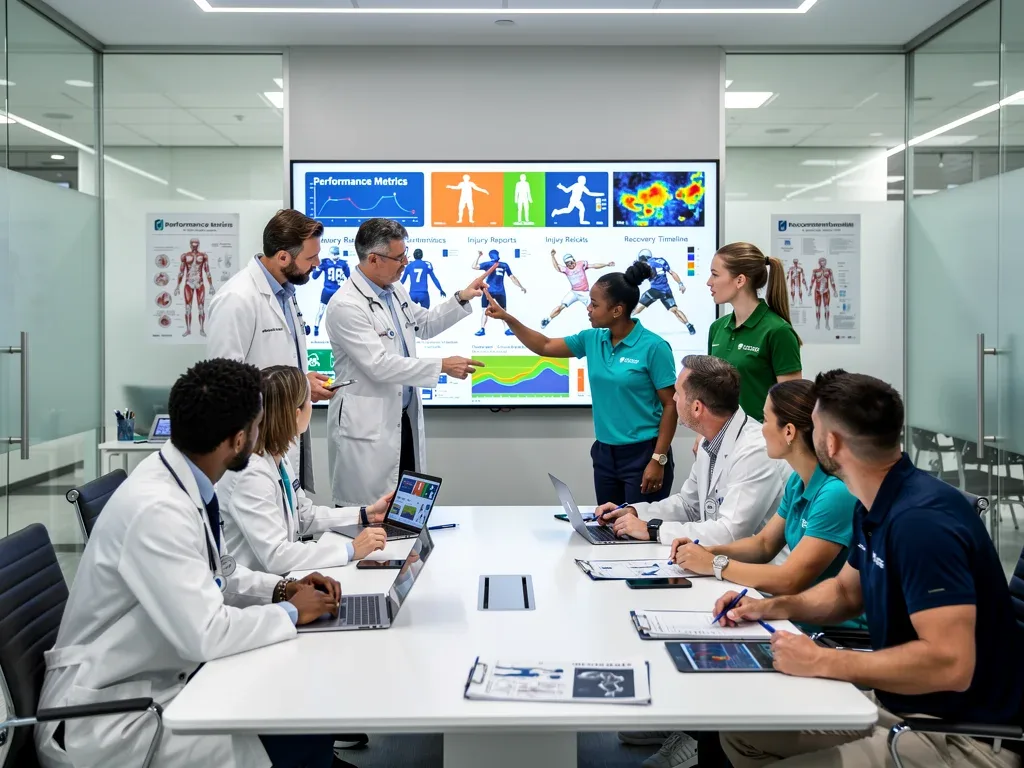
The integration of data analytics into US basketball sports medicine by 2026 means that every decision, from a training modification to a rehabilitation protocol, is backed by objective evidence. This precision care minimizes guesswork and maximizes the effectiveness of medical interventions, ultimately benefiting the athlete’s career and the team’s success.
Advanced therapeutic modalities and recovery protocols
Recovery is just as critical as training in the elite world of US basketball. By 2026, sports medicine will feature an array of advanced therapeutic modalities and highly personalized recovery protocols designed to accelerate healing, reduce downtime, and enhance overall player resilience. These innovations are reshaping how athletes recover from intense physical demands.
The goal is to not only mend injuries but to ensure players return stronger and more resistant to future setbacks. This involves a blend of cutting-edge technology and a deep understanding of human physiology, all tailored to the individual needs of each basketball player.
innovative rehabilitation techniques
Rehabilitation is no longer a one-size-fits-all process. Modern sports medicine employs highly specific and innovative techniques to restore function and build resilience.
- Cryotherapy and hyperbaric oxygen therapy: Accelerating recovery and reducing inflammation.
- Neuromuscular electrical stimulation (NMES): Aiding muscle re-education and strength recovery post-injury.
- Blood flow restriction (BFR) training: Allowing for strength gains with lower loads, crucial during early rehabilitation phases.
These techniques, often combined with traditional physical therapy, create a powerful synergy that speeds up the healing process. The emphasis is on functional recovery, ensuring that athletes can perform basketball-specific movements with optimal efficiency and without pain or limitation. The advancements in imaging technology also play a role, allowing medical staff to precisely track the healing process and adjust interventions as needed.
Beyond the physical, mental recovery is gaining significant recognition. Mindfulness practices, psychological counseling, and sleep optimization strategies are becoming integral components of comprehensive recovery plans. This holistic approach acknowledges that mental well-being is intrinsically linked to physical recovery and performance, especially in the high-pressure environment of professional basketball.
Ultimately, the advanced therapeutic modalities and recovery protocols in US basketball sports medicine by 2026 are designed to optimize every aspect of an athlete’s return to play. This ensures not only a faster recovery but also a more robust and resilient athlete, ready to face the rigors of professional competition.
The rise of personalized medicine in basketball
The concept of personalized medicine, long a cornerstone in general healthcare, is now profoundly impacting US basketball. By 2026, sports medicine will move beyond generic treatment plans, embracing an individualized approach that considers each athlete’s unique genetic makeup, physiological responses, and lifestyle factors. This tailored care is proving to be a game-changer.
This shift recognizes that no two athletes are exactly alike, even if they play the same position or suffer similar injuries. What works for one player may not be optimal for another, necessitating a highly customized approach to health and performance.
genomic and proteomic insights
Understanding an athlete’s genetic predispositions can offer invaluable insights into injury risk, recovery rates, and even optimal training responses. Genomic and proteomic analyses are becoming increasingly sophisticated.
- Injury susceptibility: Identifying genetic markers associated with connective tissue strength or inflammatory responses.
- Nutritional requirements: Tailoring dietary plans based on an individual’s metabolic profile.
- Pharmacogenomics: Guiding medication choices for pain management or anti-inflammatory treatments to maximize efficacy and minimize side effects.
These advanced biological insights allow medical teams to create truly bespoke wellness and performance programs. For example, knowing an athlete’s genetic tendency towards slower collagen repair might lead to a more conservative rehabilitation timeline or specific supplementation strategies. This level of detail ensures that interventions are not only effective but also perfectly aligned with the athlete’s biological needs.
Furthermore, personalized medicine extends to environmental factors and lifestyle choices. Sleep hygiene, stress management techniques, and travel protocols are all customized to support the individual athlete’s well-being. The goal is to optimize every variable that contributes to health and performance, creating an environment where each player can thrive.
In essence, the rise of personalized medicine in US basketball sports medicine by 2026 signifies a departure from broad guidelines towards highly specific, evidence-based interventions. This ensures that every athlete receives the most effective and appropriate care, fostering unparalleled levels of health and athletic achievement.
Mental health and well-being integration
In the high-pressure environment of professional basketball, mental health is as critical as physical health. By 2026, US basketball sports medicine will fully integrate mental health and well-being services, recognizing that a healthy mind is essential for peak performance and overall athlete longevity. This comprehensive approach addresses the psychological demands placed on players.
The stigma surrounding mental health in sports is gradually eroding, paving the way for more open discussions and proactive support systems. Teams are investing in resources to ensure their athletes are not just physically resilient but also mentally robust.
psychological support and performance psychology
Providing robust psychological support is becoming a standard practice, moving beyond crisis intervention to proactive mental conditioning.
- Performance psychology coaching: Helping athletes develop resilience, focus, and coping mechanisms for pressure situations.
- Access to licensed therapists: Offering confidential counseling for stress, anxiety, depression, and other mental health challenges.
- Mindfulness and meditation programs: Promoting mental clarity, stress reduction, and improved sleep quality.
These services are integrated seamlessly into the daily routines of athletes, making mental health support easily accessible and normalized. The focus is on developing mental skills that can enhance on-court performance, such as visualization, goal setting, and emotional regulation. By addressing mental challenges proactively, athletes are better equipped to handle the intense scrutiny and demands of professional basketball.
The integration of mental health and well-being into US basketball sports medicine by 2026 underscores a holistic understanding of the athlete. It acknowledges that physical prowess is intrinsically linked to mental fortitude, and investing in both areas yields superior results on and off the court. This approach fosters not just better players, but healthier, happier individuals.
Technological innovations driving future care
The rapid pace of technological innovation continues to reshape every facet of our lives, and sports medicine in US basketball is no exception. By 2026, a new wave of technologies will be at the forefront of player care, offering unprecedented capabilities in diagnostics, treatment, and performance enhancement. These innovations are fundamental to the evolution of sports medicine.
From artificial intelligence to virtual reality, these tools are not merely supplementary; they are becoming integral to how medical teams manage and optimize athlete health. The future of sports medicine is undeniably intertwined with technological advancement.
ai and machine learning in diagnostics and prediction
Artificial intelligence (AI) and machine learning (ML) are transforming the ability to analyze complex medical data, leading to more accurate diagnoses and predictive models.
- Predictive analytics for injury risk: AI algorithms processing vast datasets to identify patterns and forecast potential injuries.
- Automated movement analysis: ML algorithms evaluating biomechanical data from sensors to detect subtle deviations in form.
- Personalized treatment recommendations: AI systems suggesting optimal rehabilitation protocols based on individual patient data and outcomes.
These AI-powered tools allow medical professionals to identify at-risk athletes much earlier, enabling pre-emptive interventions that can prevent severe injuries. For example, an AI might flag a player showing subtle changes in their jumping mechanics that a human eye might miss, prompting a targeted strength and conditioning adjustment. This proactive capability is a cornerstone of future sports medicine.
Furthermore, virtual reality (VR) and augmented reality (AR) are finding applications in rehabilitation and training. VR can create immersive environments for controlled, sport-specific exercises, helping athletes regain confidence and refine movements without the full impact of real-world scenarios. AR can overlay performance metrics onto an athlete’s field of vision during training, providing immediate feedback for technique correction.
The technological innovations driving US basketball sports medicine by 2026 will lead to a more efficient, precise, and proactive system of care. These tools empower medical teams to make data-informed decisions, ultimately enhancing player safety, performance, and career longevity in an increasingly competitive landscape.
| Key Aspect | Description by 2026 |
|---|---|
| Proactive Prevention | Shift from reactive injury treatment to advanced predictive analytics and personalized prevention strategies. |
| Data-Driven Care | Extensive use of wearable tech, biomechanical sensors, and AI for real-time player monitoring and insights. |
| Personalized Medicine | Tailored treatment plans based on genetic profiles, physiological responses, and individual lifestyle factors. |
| Holistic Well-being | Comprehensive integration of mental health support, recovery protocols, and advanced therapies. |
Frequently Asked Questions About US Basketball Sports Medicine in 2026
How will sports medicine predict injuries in US basketball by 2026?▼By 2026, sports medicine will leverage advanced AI and machine learning algorithms. These systems analyze vast datasets from wearable sensors, biomechanical analyses, and historical injury records to identify subtle patterns and predict individual player injury risks with high accuracy, enabling proactive interventions.
What role will personalized medicine play in player care?▼Personalized medicine will be central, tailoring treatment and training plans based on each player’s unique genetic makeup, physiological responses, and lifestyle. This includes customized nutrition, specific rehabilitation protocols, and targeted performance optimization strategies, moving away from generalized approaches.
Are mental health services becoming standard in US basketball sports medicine?▼Absolutely. By 2026, mental health and well-being support will be fully integrated. Teams will provide access to performance psychologists, licensed therapists, and mindfulness programs to help athletes manage stress, enhance focus, and maintain overall psychological resilience, acknowledging its impact on physical performance.
What new technologies will dominate recovery protocols?▼Advanced recovery protocols will incorporate technologies like cryotherapy, hyperbaric oxygen therapy, and neuromuscular electrical stimulation. Virtual and augmented reality will also be used for rehabilitation, offering immersive and controlled environments for functional recovery, accelerating healing and reducing downtime.
How will data analytics improve player longevity in basketball?▼Data analytics, through continuous monitoring of biometric data and movement patterns, allows for precise load management and early detection of potential issues. This proactive, data-driven approach minimizes overexertion and addresses vulnerabilities before they lead to severe injuries, thereby significantly extending players’ careers.
Conclusion
The landscape of sports medicine in US basketball by 2026 is undergoing a profound transformation, moving towards a highly sophisticated, data-driven, and athlete-centric model. This evolution encompasses everything from predictive injury prevention and personalized therapeutic interventions to the crucial integration of mental health support. The goal is clear: to maximize player longevity, enhance performance, and ensure the holistic well-being of athletes in one of the world’s most demanding sports. As technology continues to advance and our understanding of human physiology deepens, the future of basketball sports medicine promises an exciting era of unparalleled care and athletic achievement.